
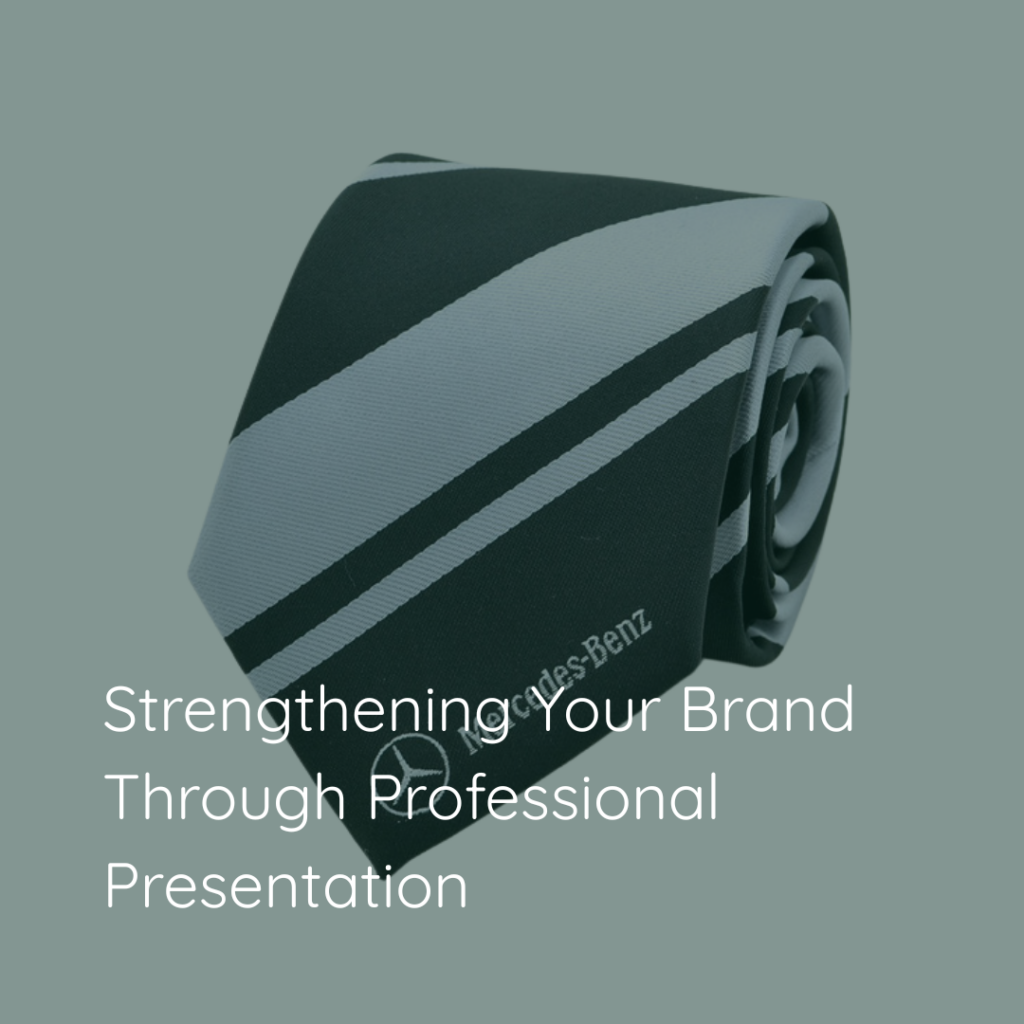
Designing a corporate tie involves more than placing a company logo onto a standard pattern.
A successful design needs to complement your existing uniform, reflect your brand colours accurately and remain practical for the people who will wear it. The right fabric, production method and pattern will depend on where the tie will be used, how frequently it will be worn and the impression your organisation wants to create.
At James Morton Ties, we have spent over 40 years helping businesses and organisations turn their branding into distinctive, practical ties.
This guide explains how to plan a corporate tie design, including the information to include in your brief, the differences between woven and printed ties, the available fabrics and what to expect during the ordering process.
What Makes a Corporate Tie Design Effective?
The most effective corporate ties feel like a natural part of the organisation’s uniform.
The company branding should be recognisable without making the tie look overly promotional. Achieving that balance usually depends on several key design decisions.
Brand colours
Your tie should coordinate with the rest of your corporate identity, including uniforms, shirts, jackets and other branded materials.
If your brand guidelines include Pantone references, these can be used as the starting point for the design. Colours can then be matched as closely as the selected fabric and manufacturing method allow.
It is also important to consider how the colours will work when worn. A bright brand colour may be effective as a small stripe or woven motif but could feel overpowering when used across the whole tie.
Logo placement
A company logo does not always need to appear as a large, prominent feature.
Depending on your organisation and uniform style, the logo could be incorporated as:
- A small repeating motif
- A single crest
- A subtle woven shadow effect
- Part of a striped pattern
- A contrasting detail near the bottom of the tie
- A discreet design visible only at close range
A subtle pattern may be better suited to professional or formal environments. A more visible logo may work well for events, exhibitions, hospitality teams or customer-facing staff.
Pattern and layout
The pattern should reflect both your brand and the setting in which the ties will be worn.
Popular corporate tie layouts include:
- Traditional diagonal stripes
- Repeating company logos
- Small geometric motifs
- Crests and emblems
- Plain background colours with one branded detail
- Tonal patterns using different shades of the same colour
The aim is to create a design that is recognisable, wearable and appropriate for the organisation.
Our in-house design team can produce free artwork for approval before you place an order. You can also explore initial ideas using our online tie designer tool.
What to Include in Your Corporate Tie Design Brief
You do not need to arrive with a finished design. However, providing a clear brief will help the design team understand what the ties need to achieve.
Useful information includes:
- Your company logo in a high-quality format
- Brand guidelines and Pantone colour references
- Photographs or details of the existing uniform
- The number of ties required
- Where and how frequently the ties will be worn
- Whether you want the branding to be subtle or prominent
- Your preferred tie width and length
- Any required fastening style, such as standard or clip-on
- Your target delivery date
- Any environmental or sustainability requirements
- Your expected budget
It is also helpful to explain who will wear the ties.
A tie designed for everyday office use may require a different fabric and level of durability from one created for a one-off conference, awards ceremony or company anniversary.
Woven or Printed: Choosing the Right Production Method
One of the main decisions is whether the design should be woven or printed.
Neither option is automatically better. The right choice depends on the artwork, the required finish and how the ties will be used.
Woven corporate ties
With a woven tie, the colours and pattern are woven directly into the fabric. The design forms part of the material rather than being added afterwards.
Woven ties are particularly suitable for:
- Stripes
- Repeating patterns
- Simple logos
- Crests
- Geometric designs
- Everyday staff uniforms
They usually have a textured, traditional appearance and are highly durable, making them well suited to frequent use.
However, very small text, gradients and highly detailed logos may need to be simplified so they can be reproduced clearly within the weave.
Printed corporate ties
Printed ties use dye-printing methods to reproduce the design within the fabric.
This makes them suitable for artwork containing:
- Fine details
- Complex illustrations
- Gradients
- Multiple colours
- Detailed crests
- More intricate patterns
Printed designs can achieve a smoother finish and provide greater flexibility when a logo or image cannot be recreated effectively through weaving.
Our design team can recommend the most appropriate method once we have reviewed your logo, colours and intended design.
For a more detailed comparison, read our guide to woven, printed and silk ties.
Silk, Polyester or Recycled Polyester?
After choosing between a woven and printed design, you will need to select the most suitable fabric.
Silk
Silk provides a soft, luxurious finish and a natural drape.
It is a popular option for:
- Executive uniforms
- Corporate hospitality
- Client gifts
- Awards events
- Formal occasions
- Premium branded merchandise
Silk can be woven or printed, depending on the design.
Polyester
Polyester is durable, cost-effective and well suited to regular uniform use.
It holds colour effectively and can be a practical choice for:
- Large staff teams
- Everyday uniforms
- Schools and clubs
- Hospitality businesses
- Customer-facing employees
- Organisations requiring regular repeat orders
Polyester can provide a high-quality finish while keeping costs manageable when ordering at volume.
Recycled polyester
Businesses with sustainability or ESG commitments may prefer recycled polyester.
Our eco-friendly ties are made using yarn created from recycled plastic bottles. They can still be colour-matched and customised with woven branding in the same way as standard polyester ties.
Each tie uses material equivalent to approximately two recycled plastic bottles and is manufactured in UK mills powered by solar energy.
This allows businesses to choose a more sustainable option without significantly changing the appearance or practicality of the finished tie.
What Affects the Cost of Corporate Ties?
The cost of a custom corporate tie will depend on the design and order requirements.
The main factors include:
Order quantity
Larger orders usually reduce the cost per tie. Minimum quantities start from 30 ties, although the exact minimum may depend on the chosen design, fabric and production route.
Fabric
Silk is generally more expensive than polyester, while recycled polyester may carry a small premium compared with standard polyester.
Design complexity
A simple striped pattern may cost less to produce than a design containing several colours, detailed logos or complex artwork.
The production method may also be influenced by the complexity of the design.
UK or overseas production
Corporate ties can be manufactured in the UK or overseas.
UK production may be suitable for shorter lead times, smaller quantities or businesses that prioritise British manufacturing. Overseas production can provide a cost-effective option for larger orders, provided there is enough time available.
Delivery requirements
A tight deadline may limit the available manufacturing options. Sharing the required delivery date at the beginning of the process allows the team to recommend a realistic production route.
Additional details
Custom labels, presentation boxes, individual packaging and other finishing options may also affect the final quotation.
Our team can provide clear recommendations based on your design, quantity, deadline and budget.
How the Design and Ordering Process Works
Every project is different, but most corporate tie orders follow the same general process.
1. Send us your brief
You can provide your logo, brand guidelines, Pantone references and existing uniform details.
You can also send examples of styles you like. A complete specification is not necessary. Many clients begin with only a logo, colour palette and general idea.
2. Receive free artwork
Our in-house designers will create digital artwork showing how the proposed tie could look.
The artwork can be amended until you are happy with the pattern, colours and logo placement.
There is no charge for the design service and no obligation to place an order.
3. Select the fabric and production method
We will advise whether the design is best suited to a woven or printed tie.
We can also discuss silk, polyester and recycled polyester, along with the available UK and overseas manufacturing options.
4. Approve a finished sample
Before the main order enters production, a fully made sample tie can be prepared for approval.
This gives you the opportunity to check the colours, proportions, fabric and overall appearance before committing to the full quantity.
5. Begin production
Once the design and sample have been approved, the main order will enter production.
Production typically takes between four and six weeks, depending on the design, quantity and selected manufacturing route. More precise timescales will be confirmed before the order is placed.
6. Delivery and repeat orders
The finished ties will be delivered to the agreed address.
Your design can also be retained for future repeat orders, helping maintain consistency when new employees join or additional stock is required.
Where Corporate Ties Can Be Used
A well-designed corporate tie can support a consistent appearance across many different settings.
Common uses include:
- Everyday staff uniforms
- Client meetings
- Conferences and trade exhibitions
- Corporate hospitality
- Hotels, restaurants and front-of-house teams
- Awards ceremonies
- Company anniversaries
- Long-service recognition
- Sales teams
- Security and transport uniforms
- Branded gifts
For events and exhibitions, a distinctive tie can also make employees easier to identify in a busy environment.
You can find further ideas in our guide to corporate moments where ties matter.
Designing a New Tie During a Company Rebrand
A company rebrand is a good opportunity to review whether existing uniform accessories still reflect the organisation’s visual identity.
Changes to the logo, colours or brand positioning may mean that older ties no longer coordinate with the wider uniform.
When planning a replacement design, consider:
- Whether the previous colours should be retained
- How prominently the new logo should appear
- Whether existing shirts and jackets will remain in use
- When the new branding will officially launch
- How much existing tie stock remains
- Whether ties should be introduced across all locations at the same time
- Whether old and new designs will overlap during the transition
Starting the tie design process early can help ensure the finished products are ready before the new identity is launched.
Read more about using corporate ties as part of a company rebrand.
Frequently Asked Questions
What is the minimum order for a corporate tie?
Minimum quantities start from 30 ties. The exact requirement may depend on the selected fabric, design and manufacturing method.
Can you match our company colours?
Yes. We can work from Pantone references supplied in your brand guidelines and match the colours as closely as the selected fabric and production method allow.
Should we choose a woven or printed tie?
Woven ties are suitable for stripes, repeating motifs and simpler logos. Printed ties are better for artwork containing fine details, gradients or a larger number of colours.
Our designers will recommend the most appropriate option after reviewing your artwork.
How long does production take?
Production typically takes between four and six weeks after the artwork and sample have been approved.
The exact timescale will depend on the quantity, design complexity and whether the ties are manufactured in the UK or overseas.
Is the corporate tie design service free?
Yes. Our in-house design service is free and there is no obligation to place an order.
Can you manufacture the ties in the UK?
Yes. We offer both UK and overseas production options.
We can recommend the most suitable route based on the required quantity, budget, design and delivery deadline.
Can we order the same design again in the future?
Yes. Your approved design can be retained to make future repeat orders easier and help maintain consistency across your organisation.
Are recycled corporate ties available?
Yes. We offer recycled polyester ties made using yarn produced from recycled plastic bottles. They can be customised with your company colours and branding.
Start Your Corporate Tie Design
Whether you already have a complete brief or only a logo and an initial idea, our design team can help turn it into a practical, distinctive corporate tie.
As a British custom tie manufacturer with more than 40 years of experience, James Morton Ties works with businesses and organisations across the UK.
Visit our corporate ties page to explore the available options, or contact us for a free design and quotation.